Inspiration to Save Perspiration
The eyes have it.

Give or take the odd day here and there as well as the odd holiday, I have been writing a daily newsletter for a number of companies and individuals for just over 8 years and every now and then I have been asked about ‘inspiration.’ Specifically, where does it come from?
The answer is everywhere.
One of the first pieces I ever wrote was based upon a picture like this: -

And entitled: SUNDAE SCHOOL FOR HEATHENS where I talked about the chaos of my early days at Sunday School and how they influenced my personal and business life.
Every day provides many opportunities for magic, mystery, creativity, and poetry. It necessitates, however, that we slow down to be able to see them. If we are constantly rushing from one appointment to the next or thrashing about mentally, we will miss countless golden opportunities. Put another way, we have to become listeners to be able to hear and observers to be able to see.
There are widespread misconceptions reinforced, alas, by social media that for inspiration to strike, you need to be transported into a lovely picturesque landscape: ideally, an elegant, cozy room with a well-organised desk overlooking some breathtakingly beautiful scenery, like a lush countryside with daffodils or the sea in multiple shades of blue, as you type your sentences to the sound of the waves in the background.
I type, if you can call it that, facing a wall with this picture that I took in front of me: -
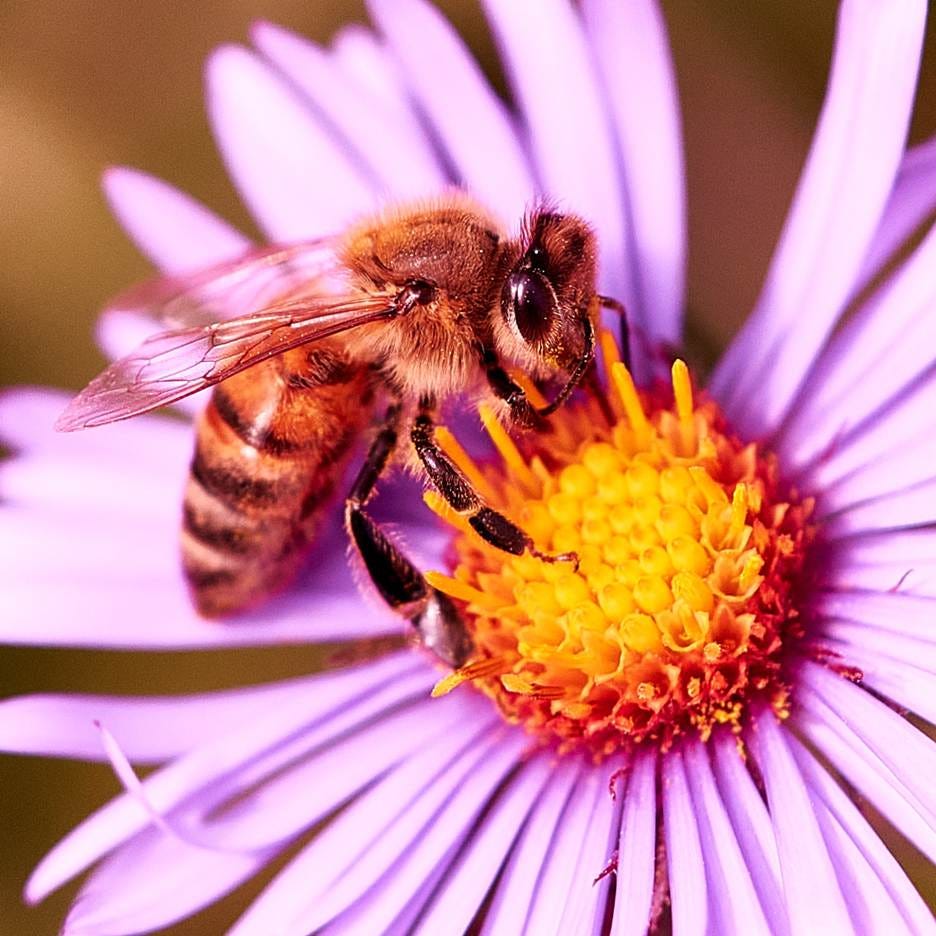
Inspiration comes from within — and from everywhere. Every day has a story. Every house I pass has a story. Every person I meet has one too.
All of these are there for the taking. If I choose to accept them then all I need to give back is time. Time to get the electrons formed into words and sentences and then packed off likes kids heading to college.
In England, I used to live close to the church and cemetery where Thomas Gray wrote his. “Elegy Written in a Country Churchyard, which begins: -
The curfew tolls the knell of parting day,
The lowing herd wind slowly o’er the lea,
The plowman homeward plods his weary way,
And leaves the world to darkness and to me.
Now fades the glimm’ring landscape on the sight,
And all the air a solemn stillness holds,
Save where the beetle wheels his droning flight,
And drowsy tinklings lull the distant folds;
Save that from yonder ivy-mantled tow’r
The moping owl does to the moon complain
Of such, as wand’ring near her secret bow’r,
Molest her ancient solitary reign.
So, when I do hesitate to come up with an idea, I remind myself of having sat in that same churchyard, after taking pictures, and thinking of all the stories trapped, literally, under my feet and how I could liberate them. Tales of the young, the old, the successful, the loved, the unloved, the infirm, the unfortunate, the caring, the selfish, the good and the less good.
After that, it never takes long to rekindle inspiration.
But we can become creative and inspired by many things. In Proust’s ‘In Search of Lost Time,’ dipping his madeleine into tea transported him to a time gone by. Finding a letter in an attic did the same in L.P. Hartley’s book, ‘The Go Between.’ In ‘The Blood of Others,’ by Simone de Beauvoir, a question is asked at the beginning of page one and is answered at the end of the last page as the story unfolds inbetween.
Another way of becoming inspired is to move away from functional fixedness and learn to be open minded. Write down how many uses you can think of for a brick - other than building. A weapon, a straight edge, a unit of length (a ruler), a weight, a doorstop, a fulcrum . . . and the list goes on.
The root of inspiration is the Latin word “inspirare,” – to breathe into. We take inspiration from the world around us — “breathing it in” — and then “breathe it back out” through how we apply it to our lives.
Inspiration is also a biproduct of curiosity. It occurs by asking questions, observing, and allowing ourselves to take in new experiences without judgment or criticism. Buddhists call this a beginner’s mind.
All to often, life requires us to process information and immediately react — driving, working, caring for a family member, for example. However, the inspiration process flourishes best with being open to the unknown. Getting into this headspace might mean slowing down, looking out, and resisting the natural inclination to transform experience to judgment.
The sources for inspiration are practically limitless - just bring along an open mind.
Meanwhile, I need to think about tomorrow’s piece. Let me find a cemetery – better yet, a sundae!